Screen Time Recommendations by Age: A Parent's Guide to Healthy Limits
Most parents guess when it comes to screen time. You hope you are doing the right thing. But no one gives you a clear answer.
This article gives you that answer.
You will learn screen time recommendations by age for children 0 to 18. You will also learn simple rules like "no phones at the table" and how to enforce limits without daily fights.
Let us start with the most important question.
Why Age-Based Screen Time Matters
A 5-year-old cannot handle the same screen time as a 15-year-old. Their brain development, self-control, and sleep needs are completely different.
Following screen time limits by age protects your child from:
- Sleep loss
- Mood swings
- Falling grades
- Reduced attention span
When you match limits to your child's age, you reduce resistance. The rules feel fair. And you protect what matters most: their health and your relationship.

Screen Time by Age Group
Here are the screen time recommendations by age based on pediatric guidelines and real-world testing with thousands of families.
Ages 0‑2 – No Screens (Except Video Calls)
The first two years are critical for brain development. Screens replace real interaction. The exception is video calls with grandparents or family.
Tip: If you need a distraction, use music or a sensory toy instead of a tablet.
Ages 3‑7 – 30‑60 Minutes of Quality Content
At this age, children learn through play and conversation. Screens should be a small part of their day. Choose educational content (PBS, Kahn Academy, simple puzzles). Avoid fast-paced, addictive apps.
Tip: Watch together. Talk about what you see. That turns screen time into learning time.
Ages 8‑12 – 1‑1.5 Hours, Start Mentoring
By now, friends are on devices. Social pressure starts. Your job shifts from "policing" to "mentoring."
Set clear screen time limits by age but also explain why. Show them how to spot ads, avoid scams, and take breaks.
Tip: Keep devices in common areas. No phones in the bedroom overnight.
Ages 13‑18 – 2 Hours, Teach Self‑Control
The recommended screen time for teenager is no more than 2 hours of recreational screen time per day (schoolwork separate). At this stage, your goal is self-management.
They will have unlimited access soon. Teach them to recognize when screen time hurts their sleep, mood, or grades.
Tip: Create a family contract. Both parents and teens sign it. Update it every few months.
Screen Wars: A Parent's Guide to Managing Kids' Phone Time
You need more than numbers. You need a system that ends daily fights.
That is why I wrote Screen Wars. It gives you age-based limits, real scripts for pushback, 50 screen-free activities, and a printable family phone contract.
No shame. No judgment. Just practical steps that work.

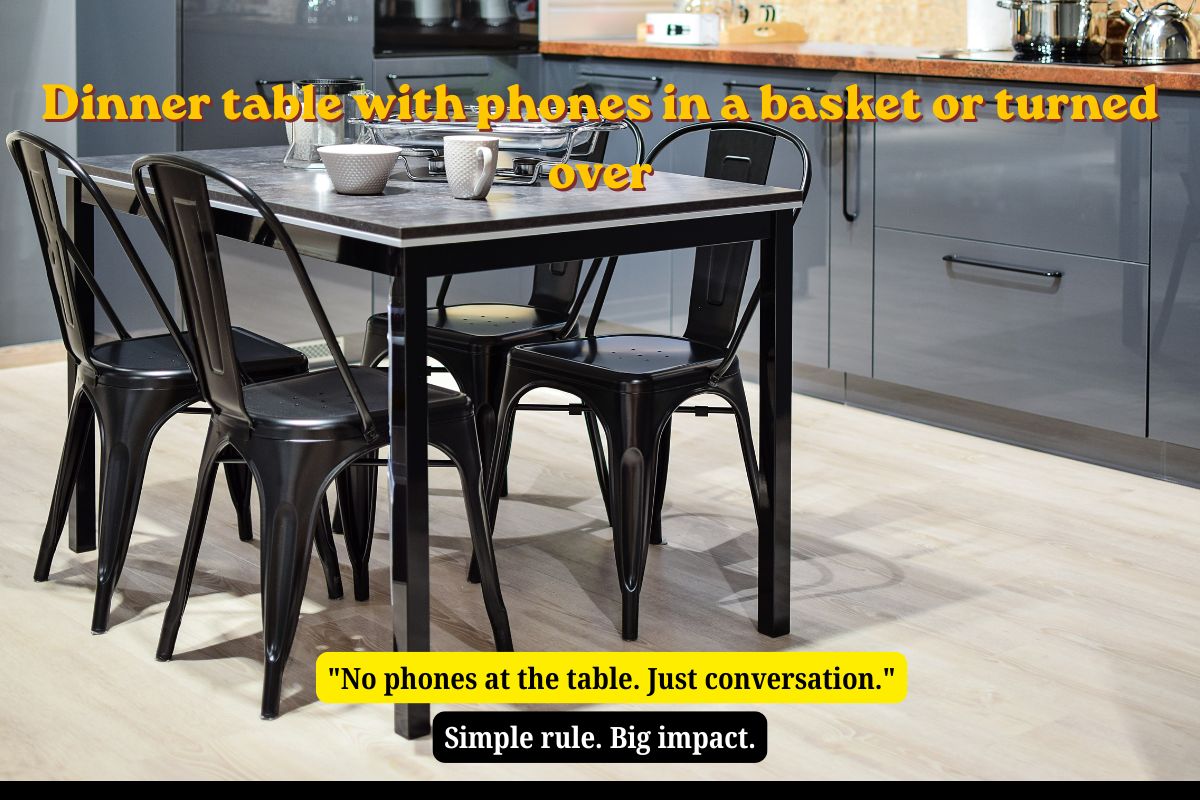
The "Phone on the Table" Rule – Why It Works
Simple rules work better than complicated systems. The phone on the table rule is the simplest.
During family meals, all phones go into a basket or face down in the center of the table. No exceptions. Parents follow the rule too.
This one change does three things:
- It protects family conversation time
- It models self-control for your child
- It reduces the daily fight over screens
Try it for one week. You will be surprised how much connection returns.
5 Signs Your Child Needs Stricter Limits
Even with screen time recommendations by age, some children struggle more. Watch for these red flags:
- Sleep loss – Your child is hard to wake or tired during the day.
- Mood swings – Extreme anger or sadness when screen time ends.
- Falling grades – Homework takes twice as long as it should.
- Social withdrawal – No interest in offline friends or activities.
- Chores ignored – Basic responsibilities are pushed aside for screens.
If you see two or more of these signs for more than two weeks, tighten limits immediately. You can always loosen them later.
How to Enforce Limits Without Meltdowns
You set the rule. Your child explodes. Now what?
- Give warnings – "Five more minutes, then we are done."
- Name their feeling – "I see you are upset. You want more time."
- Offer a choice – "Do you turn it off yourself, or should I?"
- Stay calm – Your panic fuels their panic.
If they still scream, wait. Do not give in. The first week is the hardest. After that, resistance drops by half.
Sample Daily Screen Schedule (by Age)
For a 9-year-old (school night)
- 3:30 PM – Snack and break (no screens)
- 4:00 PM – Homework (computer only if needed)
- 5:00 PM – 45 minutes earned screen time
- 5:45 PM – Dinner (no phones at the table)
- 7:00 PM – Family walk or board game
- 8:00 PM – Wind-down (no screens one hour before bed)
For a 15-year-old (school night)
- 3:30 PM – Homework first
- 5:00 PM – 90 minutes earned screen time
- 6:30 PM – Dinner (all phones in the kitchen)
- 7:30 PM – Chores or personal project
- 9:00 PM – Wind-down (no screens one hour before bed)
Conclusion
You now have screen time recommendations by age for every stage of childhood. You know why the phone on the table rule works. And you have a sample schedule to adapt for your family.
Start with one small change this week. One rule. One conversation. One meal without phones.
Small changes add up. You can win this war.
For a complete system with real scripts, a printable contract, and 50 screen-free activities, get your copy of Screen Wars today.